What a Security Monitoring Plan Actually Covers
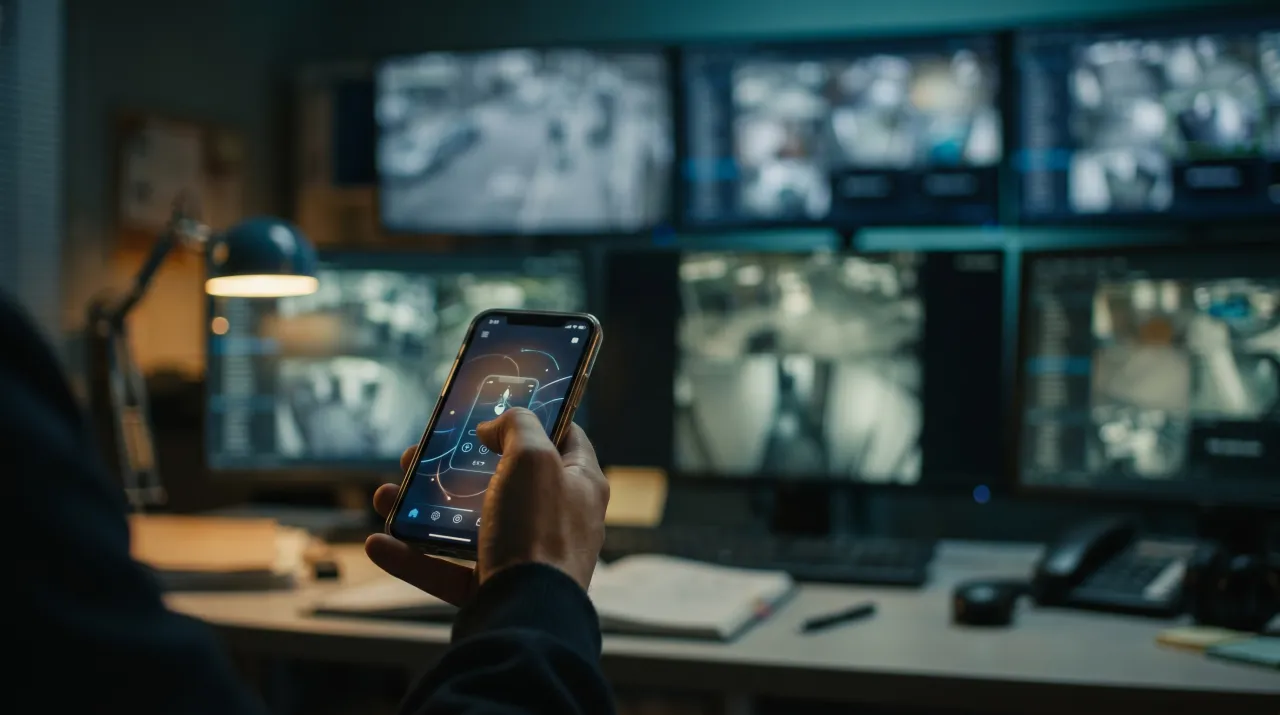
Here's the assumption that quietly undoes a lot of security setups: cameras everywhere, so the owner feels covered — without ever asking the obvious question of who's actually watching when something happens. A recorder captures everything in clean detail and asks nothing of you until you go looking. So a weekend event, whatever it is, plays out to an empty room, and the footage just sits there until Monday. The recording worked perfectly. The system still didn't do anything.
This is the gap nobody explains when they sell you cameras. Recording and monitoring are not the same thing, and most businesses have the first and assume it includes the second. A camera that records gives you a record after the fact — useful for police and insurance, genuinely. A monitored system means someone or something is actually paying attention while it's happening, so an after-hours event becomes a response instead of a Monday-morning discovery. In low-crime OC that "event" is more often a system failure or an honest dispute than a break-in — but the principle is identical: a record you check later is worth less than attention in the moment.
Recording versus monitoring
Here's the distinction in plain terms. An unmonitored system records to a drive or the cloud and waits for you to go look. If nothing prompts you to look, you don't — until you walk in and find the damage. The footage is real and useful for police and insurance, but it didn't stop anything.
A monitored system adds the missing layer: attention in real time. When the system detects something that matters — a person in a closed building, a door forced after hours, motion at the loading dock at 2am — that event reaches someone who can act on it then, not two days later. That's the whole value. You're paying to compress the time between "something's wrong" and "someone's responding" from days down to minutes.
What our monitoring plan actually includes
We keep it simple: one monitoring and support plan, from $149/mo, month-to-month. You're not locked into a contract, because the system should keep your business by working, not by paperwork. Installs are quoted separately per site after the free walk; this is the ongoing plan, and the price scales with the size of the system — more cameras, more doors, more sites means more to watch, so it moves up from there.
What the plan covers:
- **Cloud recording and storage**, so your footage is safe off-site rather than sitting on a box in the building. How long it's retained scales with your setup, and we set it deliberately.
- **Real-time [AI-detection alerts](/blog/ai-camera-alerts-vs-motion-alerts)** pushed to you the moment something matters — a person in a closed building, a vehicle at the dock after hours — instead of a flood of motion noise.
- **System health checks**, so you find out about a down camera or a failing drive from us, not from missing footage after an incident.
- **Software and firmware kept current**, so the system stays in the shape it was the day we installed it.
- **Priority support**, so when you need a human you get one fast — not a ticket queue.
- **Optional active monitoring of those alerts** for higher-exposure or multi-site setups, where a flagged event reaches a person who verifies what's happening and escalates rather than landing on a phone that's face-down on a nightstand.
The honest way to scope it is by your real risk. A low-exposure daytime business needs less watching than a property that sits empty after hours, has been hit before, or runs across several locations — and because the one plan scales with the system, you're paying for the coverage your site actually calls for, not a tier you have to decode.
Cloud storage, and why off-site matters
Footage stored only on a recorder in the building has an obvious weakness: the recorder is in the building. If anything happens to the box — it's taken, or a fire or flood reaches it — your evidence is gone with it. The on-site recorder is a single point of failure for the one thing you'd actually need afterward.
Cloud storage fixes that by keeping a copy off-site, out of reach of whatever's happening on your property. It also means you can pull footage from anywhere — your phone, on vacation, the morning after — without driving in to plug into a recorder. Every monitoring tier includes cloud recording for exactly this reason. How long footage is retained scales with the plan, and we set retention deliberately based on what your situation actually calls for.
The maintenance layer nobody thinks about
Here's the failure that quietly undoes a lot of security systems: a camera goes down and nobody notices. The lens fogs, a cable fails, a firmware issue drops a feed, and the camera you were counting on is dark for three weeks before anyone realizes — usually the day you go looking for footage that was never recorded.
A monitoring plan is also a maintenance plan. The system gets health-checked, so a camera that drops offline flags to us and gets addressed before it's the gap in your coverage. You get firmware kept current, storage confirmed working, and a system that stays in the shape it was in the day we installed it. Security hardware isn't set-and-forget — it's equipment that runs 24/7 in real conditions, and the businesses that stay actually covered are the ones whose systems are being looked after, not just installed and abandoned.
How this fits the rest of your system
Monitoring is the layer that makes everything else pay off. [AI detection](/blog/ai-camera-alerts-vs-motion-alerts) decides what's worth an alert. [License-plate recognition](/blog/license-plate-recognition-commercial-property) and [access control](/blog/access-control-small-commercial-buildings) feed events into the same picture. Monitoring is what turns all of that from a record into a response. It's especially the difference-maker for [vacant property](/blog/securing-vacant-commercial-property-orange-county), where there's no staff on-site and a live response is the only thing standing between detection and a clean getaway.
You don't need every layer on day one. But if your risk is real after hours, monitoring is usually the highest-value thing to add, because it's what converts the cameras you already have into protection instead of documentation.
Month-to-month, on purpose
We don't lock monitoring behind long contracts. The plans are cancel-anytime, and that's deliberate — if the system isn't earning its keep, you shouldn't be trapped paying for it. We'd rather keep your business by being worth it every month. It also means the one plan flexes with you — it scales with the system as your exposure changes or you add sites, without renegotiating anything.
If you've got cameras recording to a box and no one actually watching, that's the gap worth closing. [Book a free site walk](/get-started) and we'll match a plan to your real risk and your sites — we cover [Mission Viejo](/security-cameras-mission-viejo) and all of OC. You can also see [everything we install and monitor](/services) across cameras, access control, and networks.
Get in touch with WERKSTATT OC — Commercial security and low-voltage for businesses across Orange County.